Not Every Snake in Austin Is Harmless — Know the Difference
Central Texas has snakes — a lot of them. Austin's unique blend of Hill Country terrain, urban creek corridors, wooded neighborhoods, and fast-expanding suburban edges creates ideal conditions for an exceptionally diverse snake population, and Travis County residents encounter more than a dozen different species on a regular basis. Call now if you suspect a venomous snake on your property at 512-800-4483.
🔴 Western Diamondback Rattlesnake: Austin's Most Dangerous Snake
Austin's most frequently encountered venomous snake, the Diamondback is identified by its bold diamond-patterned back, distinctive black and white banded tail, and the rattle that gives it its name. Growing up to seven feet in length and capable of striking with little to no warning, this powerful snake is a serious threat to people and pets alike. In Central Texas, Diamondbacks turn up around rock outcroppings, cedar brush, under backyard sheds, and in rural properties throughout the Austin metro.
🔴 Copperhead: Austin's Most Frequently Encountered Venomous Snake
No venomous snake in the United States bites more people than the Copperhead and Austin's landscape of wooded neighborhoods, shaded creek beds, and lush landscaped gardens makes Central Texas prime Copperhead territory. A medium-sized snake with a striking hourglass pattern of copper and brown bands, the Copperhead is a master of camouflage. Use extreme caution when gardening, moving woodpiles, or walking through wooded areas on your Austin property.
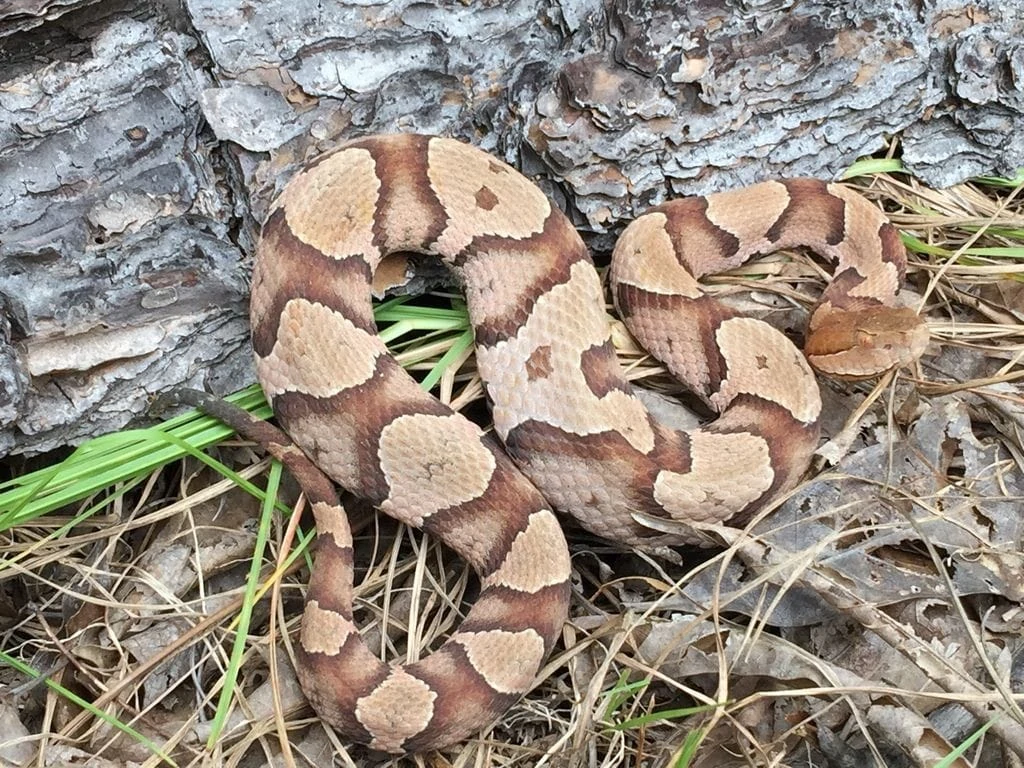
🔴 Timber Rattlesnake: Austin's Forest Dweller
Among the venomous snakes found in and around Austin, the Timber Rattlesnake stands out as one of the largest and most powerful, heavy-bodied snake. Found primarily in the dense woodland and rocky terrain of Central Texas's Hill Country and the heavily vegetated eastern Austin corridors, the Timber Rattlesnake features a striking pattern of dark crossbands over a yellowish or grayish body and can reach up to six feet in length. While generally less prone to aggression than the Western Diamondback, the Timber Rattlesnake delivers an potent venom that requires immediate emergency medical attention if a bite occurs. As Austin's suburban footprint continues to expand into rocky hillsides, dense creek bottoms, and wooded fringe areas, encounters with this impressive snake are becoming increasingly common for Central Texas homeowners.
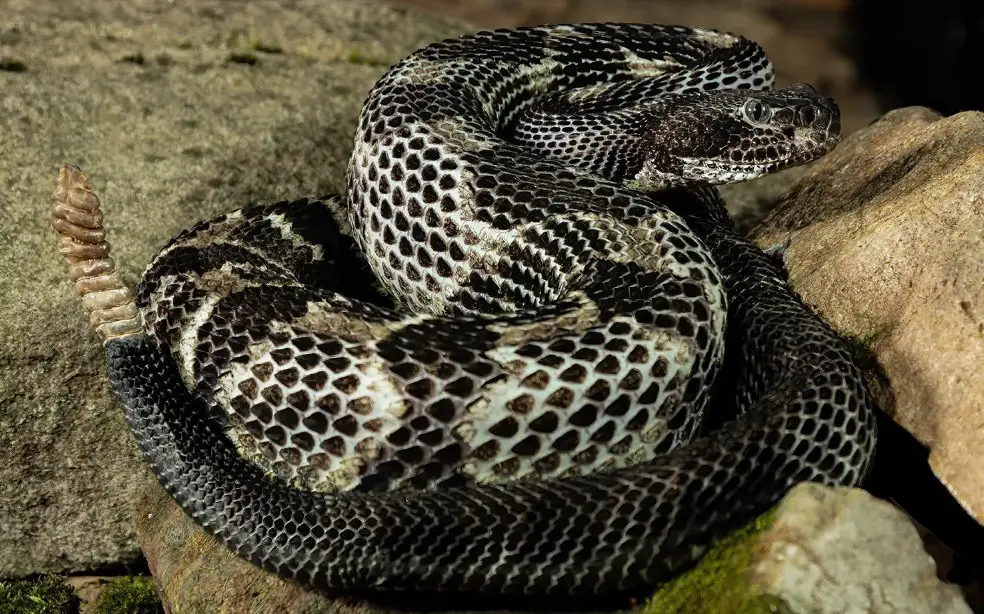
🔴 Western Massasauga: Austin's Small But Dangerous Rattlesnake
Size is no measure of danger when it comes to the Western Massasauga being one of Central Texas's lesser-known venomous rattlesnakes, and one that deserves far more caution. Typically measuring between 18 and 24 inches at maturity, the Massasauga is among the smaller rattlesnake species found in the Austin area, but what it lacks in size it more than makes up for in venom potency. Its hemotoxic venom attacks blood and tissue and requires prompt emergency medical treatment if a bite occurs. Recognized by its grayish-brown body marked with darker brown blotches and a small but functional rattle that can be surprisingly difficult to hear, the Western Massasauga is most commonly encountered near wet meadows, prairie edges, and drainage areas throughout Central Texas environments. Never underestimate this snake based on its size alone.

🔴 Cottonmouth (Water Moccasin): Austin's Most Water-Associated Venomous Snake
Of all the venomous snakes found in the Austin area, the Cottonmouth, known as the Water Moccasin, is the one most likely to be near water. One of the world's only truly aquatic pit vipers, the Cottonmouth gets its name from the striking bright white interior of its mouth. Thick-bodied and dark ranging from deep olive to nearly solid black with faint banding. The Cottonmouths are a regular presence along Austin's creeks, ponds, drainage ditches, and backyard water features. What sets this snake apart from most other species is its temperament. The Cottonmouth holds its ground and stands its position and this is a behavior that makes it uniquely dangerous for children and pets exploring near any body of water in the Austin area. If you spot a thick, dark snake near water on your property, treat it as a Cottonmouth until proven otherwise.

🔴Texas Coral Snake: Austin's Most Vividly Colored Venomous Snake
The Texas Coral Snake is one of Austin's most misunderstood venomous snakes. Slender and relatively small at around two feet in length, the Coral Snake features bold bands of red, yellow, and black that completely encircle its body. Though shy and rarely aggressive, the Coral Snake belongs to the same family as cobras and carries a potent neurotoxic venom. It is most commonly found in wooded areas, canyon edges, and coastal plains across the southeastern half of Central Texas. Never handle a Coral Snake regardless of how docile it appears.

🟢Texas Rat Snake: Austin's Most Common Non-Venomous Snake
If there is one non-venomous snake that keeps Austin homeowners calling wildlife removal services in a panic, it is the Texas Rat Snake — and understandably so. Austin's most commonly encountered large non-venomous snake, the Rat Snake has a talent for triggering alarm far beyond what its harmless nature warrants. Growing between four and six feet with a blotched pattern of dark brown or olive markings over a lighter gray or yellowish body, the Texas Rat Snake is an exceptional climber that regularly turns up in attics, barns, and garages across Central Texas following the scent trail of the rodents it hunts. When cornered or threatened it puts on a convincing show — vibrating its tail rapidly to mimic a rattlesnake and striking aggressively — a performance realistic enough to fool even experienced outdoorspeople. Completely harmless to humans, the Texas Rat Snake is nonetheless a clear signal that a rodent problem exists on your property and needs to be addressed alongside the snake itself.

🟢Milk Snake: Austin's Most Misidentified Non-Venomous Snake
Few non-venomous snakes in the Austin area generate as much alarm as the Milk Snake — and with its vivid bands of red, black, and yellow or white, it is not difficult to see why. One of Central Texas's most visually striking snake species, the Milk Snake bears a close enough resemblance to the highly venomous Texas Coral Snake to cause genuine panic in even the most level-headed homeowner. The difference, however, comes down to band order — on a Milk Snake, red bands touch black; on a Coral Snake, red bands touch yellow. The old rhyme says it best: red touch yellow, kill a fellow — red touch black, friend of Jack. A secretive and nocturnal species by nature, Milk Snakes are most commonly discovered in basements, crawl spaces, and cool dark areas around Austin area homes where they hunt rodents and small prey. Completely harmless to people, the Milk Snake is actually a beneficial presence on your property — but if you cannot identify it with absolute certainty, call Cen-Tex Wildlife Control before getting any closer.

🟢Bullsnake / Gopher Snake: Austin's Largest Non-Venomous Snake
The Bullsnake — also commonly called the Gopher Snake — is one of the most impressively sized non-venomous snakes in all of Central Texas, and without question one of the most convincing rattlesnake impersonators in the animal kingdom. Regularly reaching between four and six feet in length with some individuals pushing past eight feet, the Bullsnake is a substantial, powerful snake that commands attention wherever it turns up. Its yellowish or tan body marked with dark brown rectangular blotches along its back already draws comparisons to the Western Diamondback — but it is the Bullsnake's behavior that truly sells the illusion. When threatened it hisses with startling volume, flattens its head into a convincing triangular shape, and vibrates its tail rapidly against the ground in a performance realistic enough to fool even experienced Austin homeowners. Despite the dramatic display, the Bullsnake is completely harmless to humans and genuinely beneficial — an aggressive and highly effective predator of the mice, rats, and rodents that attract far more dangerous wildlife to your property. Commonly encountered in basements, outbuildings, and open fields across the Austin area, a Bullsnake on your property is more ally than threat — but professional relocation is always the safest option when one turns up inside a structure.

🟢Western Coachwhip: Austin's Fastest Snake
The Western Coachwhip is one of the most distinctive non-venomous snakes in Central Texas — long, slender, and built for speed. Growing between four and six feet in length, Coachwhips are tan to brown in color with a body that darkens toward the head, resembling the braided leather whip used by old stagecoaches. They are incredibly fast movers, commonly found sprinting through open fields, prairies, and tall grass across the Austin area. If cornered they will bite aggressively — but they are completely non-venomous. Coachwhips are beneficial predators feeding on rodents, lizards, and small birds.

🟢Diamondback Water Snake: Austin's Most Misidentified Non-Venomous Snake
The Diamondback Water Snake is one of the most frequently misidentified snakes in the Austin area, its thick body, aggressive defensive behavior, and water-loving habits cause many homeowners to mistake it for the venomous Cottonmouth. Growing up to four feet in length, it features a dark brown body with a distinctive diamond-shaped pattern along its back. Diamondback Water Snakes are found in virtually every creek, pond, drainage ditch, and water feature across Travis County and surrounding areas. While completely harmless, they will bite repeatedly if handled or cornered. If you see a large snake near water in Austin, call CenTex Wildlife Control for safe identification before approaching.

🟢Checkered Garter Snake: Austin's Most Common Striped Snake
The Checkered Garter Snake is one of the most frequently encountered non-venomous snakes in Austin's suburban neighborhoods, parks, and green spaces. Growing up to three feet in length, it features a distinctive checkerboard pattern of black spots over a brown body with two long pale stripes running from head to tail. Garter Snakes are active during the day and are often spotted in gardens, near water features, and in open grassy areas. They feed on frogs, small rodents, and invertebrates and pose absolutely no threat to humans or pets.

🟢Eastern Hognose Snake: Austin's Most Dramatic Non-Venomous Snake
The Eastern Hognose Snake is without a doubt Austin's most theatrical non-venomous snake and one of the most commonly mistaken for a venomous species. When threatened it flattens its head into a triangular shape and hisses loudly like a rattlesnake. Growing between two and four feet, Hognose Snakes have a distinctly upturned snout used for digging and a heavy-bodied appearance that adds to the rattlesnake resemblance. They are harmless to humans and are commonly found in open woodlands, prairies, and sandy soils throughout Central Texas.

🟢Texas Blind Snake: Austin's Most Unusual Non-Venomous Snake
The Texas Blind Snake is one of the most unusual and least recognized snakes in the Austin area — and is so frequently mistaken for an earthworm. Tiny and slender at just four to twelve inches long with a smooth pinkish-brown body, the Texas Blind Snake spends almost its entire life underground feeding on termites and ant larvae. Despite its name it is not truly blind, though its eyes are reduced to small dark spots beneath its scales. They are completely harmless and are actually considered beneficial.

🟢Rough Earth Snake: Austin's Most Common Backyard Snake
The Rough Earth Snake is one of the most commonly encountered snakes in Austin's suburban lawns, flowerbeds, and gardens and one of the least threatening. Small and inconspicuous at just seven to ten inches long, Rough Earth Snakes are plain brown or gray with a slightly rough-textured body and a pointed snout. They spend most of their time hidden under rocks, mulch, and leaf litter hunting earthworms, slugs, and small insects. Completely harmless and extremely shy, the Rough Earth Snake will almost always flee before a human ever notices it. Finding one under a pot or stepping stone in your Austin garden is completely normal and nothing to worry about.

🟢Speckled Kingsnake: Austin's Natural Rattlesnake Predator
The Speckled Kingsnake is one of Central Texas's most beneficial and fascinating non-venomous snakes — and one of the few animals on earth that actively hunts and eats venomous snakes including rattlesnakes and copperheads. Growing between three and four feet in length, Speckled Kingsnakes feature a striking black or dark brown body covered in small yellow or white speckles giving them a salt-and-pepper appearance. They are immune to pit viper venom and will constrict and consume rattlesnakes significantly larger than themselves. Found in a wide range of habitats across the Austin area including rocky terrain, woodlands, and farmland, the Speckled Kingsnake is genuinely one of the good guys in your yard.

🟢Rough Green Snake: Austin's Most Easily Identified Non-Venomous Snake
The Rough Green Snake is one of the easiest snakes to identify in Central Texas. Slender and delicate at up to three feet in length, the Rough Green Snake is an expert climber commonly found draped across shrubs, vines, and low tree branches throughout Austin's wooded neighborhoods and green spaces. They feed almost exclusively on insects, particularly grasshoppers and crickets, making them a genuinely beneficial presence in any garden. Completely harmless and notoriously shy, Rough Green Snakes are becoming increasingly harder to find in urban areas due to habitat loss and pesticide use.
.jpg "image title")
🟢Brown Snake: Austin's Smallest and Most Overlooked Non-Venomous Snake
The Brown Snake, also known as DeKay's Snake, is one of the smallest and most commonly overlooked snakes in the Austin area. Typically growing between five and fifteen inches, Brown Snakes are plain brown or grayish with a faint pale stripe running down the back and small dark spots along the sides. They are completely harmless, feeding almost exclusively on slugs, earthworms, and soft-bodied insects in gardens, lawns, and flower beds. Finding a Brown Snake under a pot, rock, or pile of mulch in your Austin yard is extremely common.

 "image title")
Snake Removal Services in Austin, TX
Cen-Tex Wildlife Control is Austin's go-to snake removal company, specializing in the safe and humane removal of venomous and non-venomous snakes from homes, yards, and structures throughout Central Texas. Trust us for thorough snake exclusion, entry point sealing, and professional identification so you never have to guess what you are dealing with again.
How can we help you with your snake issue?
Get in Touch
(512) 800-4483
Centexwildlifecontrol@gmail.com
Hours
Open today 12:00 am – 11:45 pm
Sunday-SaturdayEmergency Services 24/7
Sunday-SaturdayEmergency Services 24/7
Service Locations
We proudly serve homeowners across Austin and the greater Central Texas area, including Leander, West Lake Hills, Spicewood, Manor, Bee Cave, Round Rock, Pflugerville, Georgetown, Cedar Park, Hutto, Dripping Springs, Taylor, Tarrytown, Rollingwood, Horseshoe Bay, Driftwood, Lakeway, Liberty Hill, and nearby communities. Local experience means we understand Texas wildlife behavior and seasonal activity patterns.